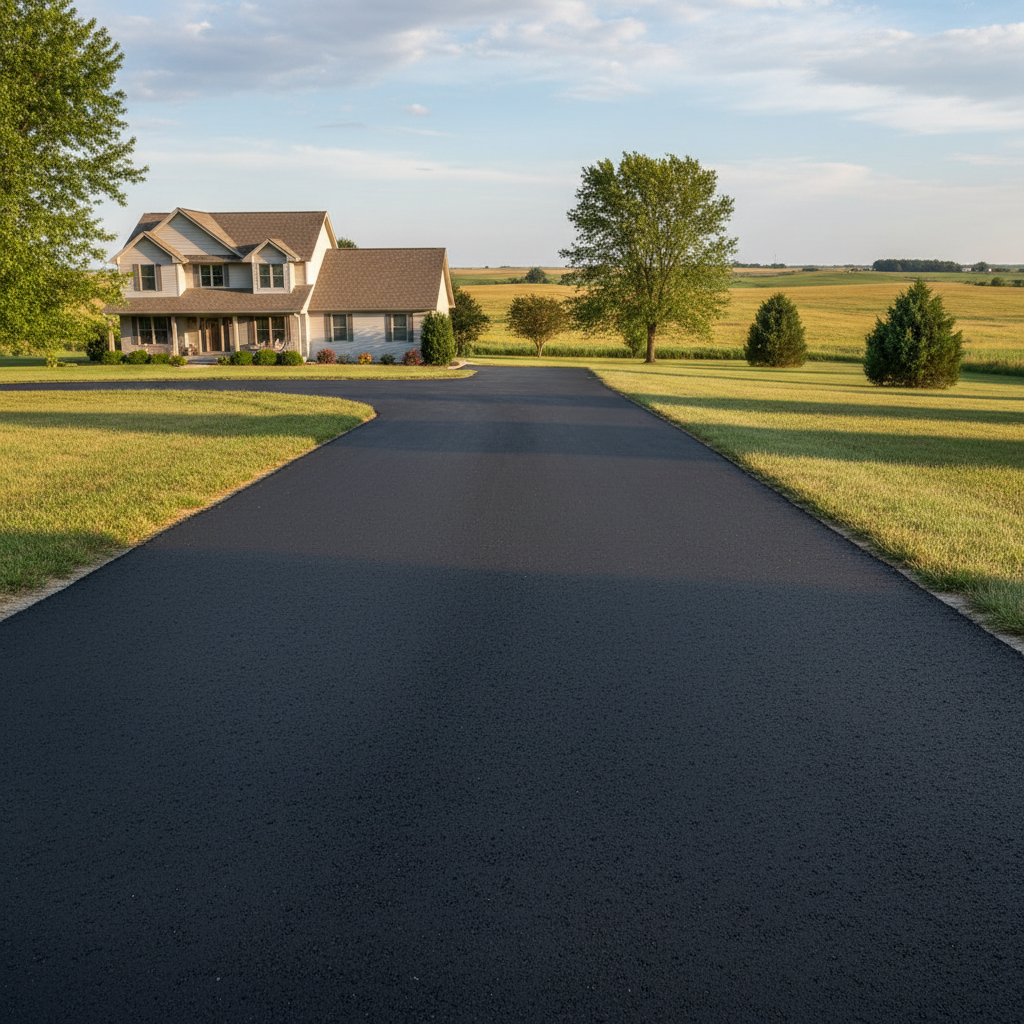
Alright, let's talk about your driveway. Whether it's asphalt or concrete, you shelled out good money for it, and you want it to last. Out here in Clearwater, KS, our weather can be brutal on pavement. We get those scorching summers, freezing winters, and enough freeze-thaw cycles to really put a strain on things. So, how do you make sure your investment stands the test of time? It's not rocket science, but it does take a little attention.
Extend Your Driveway's Life: The Basics
The best offense is a good defense, right? That's true for your driveway too. A little proactive care goes a long way.
- Sealcoating (for asphalt): This is huge. Think of it like sunscreen for your driveway. It protects against UV rays, water penetration, and even oil spills. I tell folks around here, especially with our intense summer sun, you should be looking at sealcoating every 2-3 years. It keeps the asphalt flexible and prevents those tiny cracks from turning into big ones.
- Proper Drainage: Water is the enemy. Make sure your gutters are clear and downspouts are directing water away from your driveway. If water is pooling on or next to your driveway, it's going to find its way into cracks and start causing damage, especially when it freezes.
- Avoid Heavy Loads: I know it's tempting to park that RV or heavy trailer on the driveway, but try to limit it. Concentrated weight, especially over time, can cause depressions and cracks. If you've got a new asphalt driveway, give it a good 6-12 months to fully cure before putting anything super heavy on it.
- Clean Up Spills: Oil, gas, antifreeze – these things eat away at asphalt and can stain concrete. Clean them up quickly with an absorbent material and a good degreaser.
Regular Maintenance: What You Need to Do
This isn't a full-time job, but a few routine checks can save you a headache later.
- Sweep Regularly: Get rid of dirt, leaves, and debris. This prevents organic matter from breaking down and staining, and it lets you see what's actually going on with your pavement.
- Weed Control: Weeds and grass love to push through cracks. Pull them out as soon as you see them. If they get established, their roots will widen those cracks and cause bigger problems. A little weed killer can help too, but be careful not to get it on the asphalt itself if it's a strong chemical.
- Crack Filling: This is probably the most important thing you can do yourself. Small cracks, especially on asphalt, are inevitable. But don't ignore them. Fill them with a good quality crack filler as soon as you see them. This stops water from getting in and freezing, which is what really tears up a driveway in our Kansas winters. For concrete, use a flexible sealant designed for concrete joints.
Warning Signs: When to Pay Closer Attention
Your driveway will talk to you if you know what to look for. Don't wait until it's screaming for help.
- Alligator Cracking: This looks like a series of interconnected cracks, much like an alligator's skin. On asphalt, it means the base layer is failing, and it's a serious sign. On concrete, it might be a sign of underlying soil issues or heavy loads.
- Potholes: These start small, usually from an ignored crack. Once water gets in and freezes, it expands, pushing up the pavement, and then traffic breaks it apart. Potholes only get bigger, so address them fast.
- Fading and Discoloration: For asphalt, this means the binder is oxidizing, and it's losing its flexibility. It's a sign it's time for sealcoating. For concrete, discoloration can point to drainage issues or chemical spills.
- Pooling Water: If you see puddles that don't drain after a rain, you've got a low spot or a drainage problem. This will lead to accelerated wear and tear.
- Raveling (for asphalt): This is when the aggregate (the small stones) starts to come loose from the surface. It means the asphalt is degrading and losing its structural integrity.
- Spalling (for concrete): This is when the surface of the concrete starts to flake or chip away. It can be caused by freeze-thaw cycles, de-icing salts, or poor finishing.
When to Call a Professional
Look, I'm all for DIY, but some jobs are just too big or complex for a homeowner. That's where folks like us at All Star Asphalt Inc come in.
- Large Potholes or Extensive Cracking: If you've got potholes bigger than a dinner plate, or cracks that are widespread and deep, it's time for a pro. We have the equipment and materials to do a lasting repair.
- Alligator Cracking: As I mentioned, this is a sign of base failure. It often requires removing and replacing sections of the driveway, not just patching.
- Major Drainage Issues: If water is consistently pooling or running in ways it shouldn't, you might need grading work or a more complex drainage solution.
- Significant Settling or Heaving: If sections of your driveway are noticeably higher or lower than others, it indicates serious issues with the sub-base or soil, which needs professional assessment. This can be common in areas with expansive clay soils like we have around Clearwater.
- You're Just Not Comfortable: Hey, no shame in that. If you're unsure about a repair or just don't have the time or tools, give us a call. It's better to get it done right the first time than to try a quick fix that ends up costing more down the road.
Taking care of your driveway isn't glamorous, but it's essential for protecting your property and keeping things looking good. A little effort now saves you a lot of money and hassle later. Don't let those small issues turn into big headaches.